
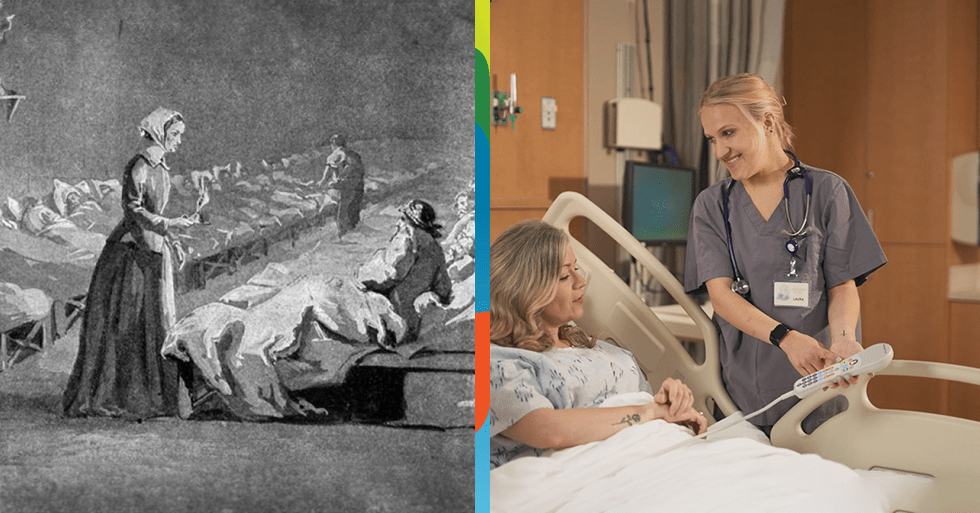
High-performing nurse call systems are the backbone of efficient, patient-centered healthcare, enabling seamless communication between patients and caregivers.
With a history that spans centuries, these systems have grown from simple handbells to sophisticated solutions featuring real-time tracking and advanced analytics.
Let’s take a closer look at the past, present, and future behind this critical nursing technology.
Florence Nightingale’s Vision: The Birth of Nurse Call Systems
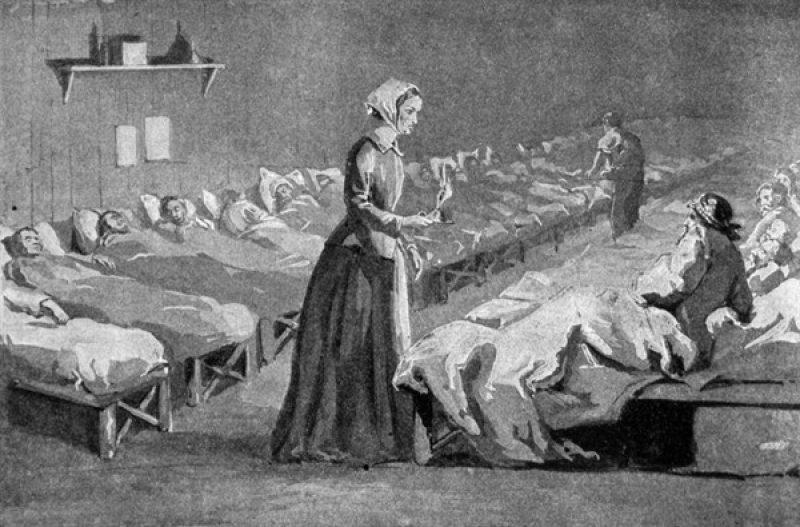
The roots of nurse call systems stretch back to the 1850s and Florence Nightingale’s pioneering work during the Crimean War. Known as the “founder of modern nursing,” she implemented basic yet transformative tools — handbells and pull cords — to help patients summon caregivers.
Though rudimentary by today’s standards, this innovation laid the groundwork for structured, responsive healthcare communication.
In fact, Nightingale’s emphasis on how timely, well-coordinated responses can greatly impact patient outcomes continues to influence how modern nurse call systems function. Additionally, the industry continues to innovate with adjacent technologies to reinforce the focus on patient-centered communication, streamlined workflows, and the prioritization of timely responses to individual needs.
Decades of Innovation Behind Nursing Technology
Nurse call systems have come a long way, evolving with each decade to reflect advancements in technology and the changing needs of healthcare.
Early 20th Century: Mechanical Call Buttons Transform Communication
The early 20th century introduced mechanical call buttons, which activated lights or buzzers at a central nurse’s station, alerting staff to patient needs and improving communication.
However, they lacked the ability to prioritize requests, requiring nurses to respond on a first-come, first-served basis, which could delay urgent care needs if those requests were received later in the queue.
The 1950s: Intercoms & Centralized Systems Improve Care Coordination
By the 1950s, intercom systems enabled two-way voice communication, giving patients a direct line to nurses. This innovation reduced unnecessary trips and enhanced clarity in patient requests.
The 1970s: Centralized Systems Revolutionize Workflow Management
By the 1970s, centralized electronic nurse call systems emerged, adding visual indicators like lights and audible tones to prioritize calls and streamline workflows. These systems began supporting multiple patient rooms, offering nurses better tools to efficiently manage patient care.
The 1990s: Wireless Devices & Digital Integration Redefine Efficiency
The 1990s brought the integration of pagers and early wireless devices, allowing nurses to move more freely while staying connected to patient needs.
The 2000s: Digital Advancements Usher in Real-Time Communication
With the rise of digital technology in the 2000s, nurse call systems incorporated features like patient monitoring, alert prioritization, and integration with hospital management software.
These advancements marked the beginning of real-time communication and data sharing, transforming the way care teams coordinated a patient’s care throughout their stay in the hospital.
What Nurse Call Systems Look Like Today


Today’s nursing technology is designed to meet the ever-changing demands of modern healthcare. West-Com’s solutions stand at the forefront, offering comprehensive capabilities that unify communication, collaboration, and safety initiatives across healthcare settings.
Since the dawn of electronic nursing technology, West-Com has pioneered the innovation transition from the basic light and sound tones of the ‘80s to the mobile and virtual care advancements of today — all while adapting (not abandoning) customers’ existing systems.
Our Connect™ Nurse Call System provides the foundation for unmatched care collaboration in any care environment. Digital workflow tools and care plans make communication practical, efficient, and highly effective. Seamless integrations amplify the benefits of our native hardware and software ensuring all care team members stay coordinated and focused on delivering outstanding care.
And, with better visibility to what is happening in care areas, healthcare leaders also stay informed and can make data-driven decisions about their facility, patients, and staff. Engagement in patient care comes naturally, and a better patient experience is the result.
West-Com’s simple, yet powerful nurse call system supports:
- Digital workflow tools and signage that automate routine tasks, engage ancillary services, and easily identify patient precautions.
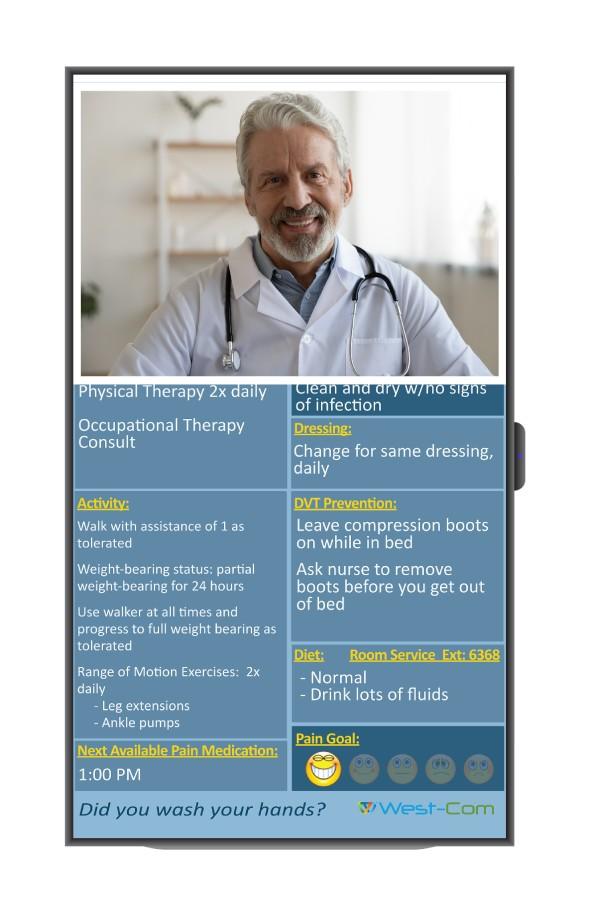
- Patient experience tools like the Patient CareBoard™, a digital whiteboard that displays automatic care plan updates from the EMR and keeps patients informed at every moment during their stay. Not only do nurses benefit from the elimination of routine tasks, patients AND families are encouraged to actively participate in their care.
- Customizable alerts to prioritize urgent needs and route patient calls to the assigned caregiver, directly to their mobile device. Busy with another patient? No problem; the call is automatically escalated using the facility’s escalation protocol.
- Seamless integrations with EMR, ADT, RTLS, staff directories, staff scheduling, and wireless devices to leverage established hospital data, automate manual processes, and easily locate staff, patients, and equipment.
- Actionable data insights with AI-driven predictive analytics and reporting to support proactive decision-making and better patient outcomes.
- Centralized monitoring via Nurse Consoles and Unit CareBoards that provide real-time visibility into patient statuses, unit activities, and staff locations, enabling faster response times and more effective collaboration among care teams.
- Virtual care programs to augment bedside care with virtual sitters, virtual nursing, and even specialty consults. Watch your patient care environment transform into a state-of-the-art care center where clinical collaboration is unprecedented, safety remains paramount, and patient and family engagement occur naturally.
Is your nurse call system keeping up? Evaluating its performance and capabilities can help ensure it meets the demands of modern healthcare and supports your staff and patient care initiatives well into the future.
Discover the Future of Nurse Call Systems with West-Com
Ready to experience the next generation of nurse call systems? Request a demo today and discover how West-Com is revolutionizing healthcare communication, delivering safer, faster and more patient-focused care.